
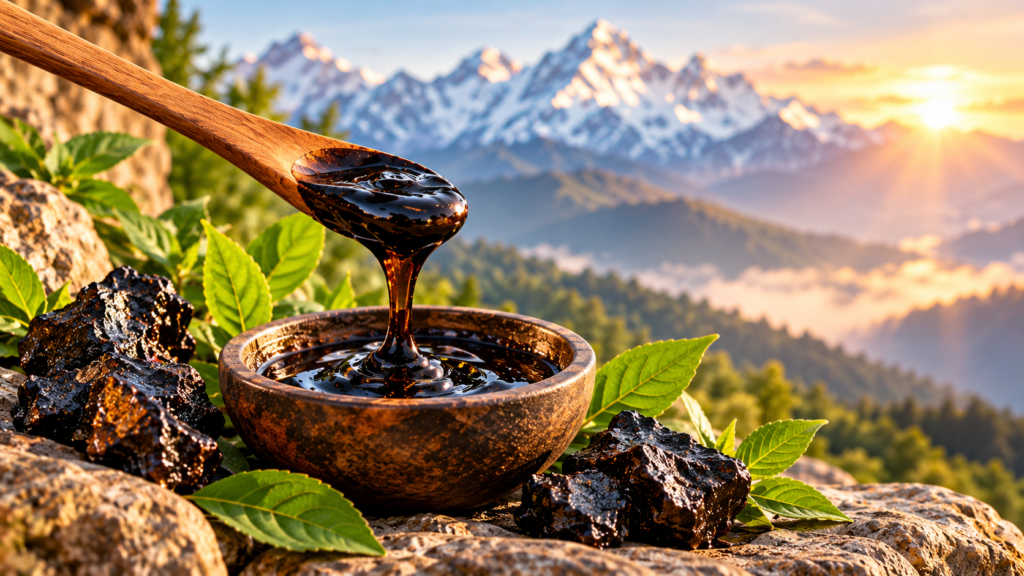
For centuries, shilajit has held an important place in Ayurveda as a traditional substance associated with strength, vitality, and rejuvenation. Found primarily in mountainous regions such as the Himalayas, shilajit is a naturally occurring mineral-rich substance that develops through the gradual decomposition of plant material and other organic matter over long periods.
In Ayurvedic tradition, shilajit is often described as a rasayana, a category of preparations traditionally associated with rejuvenation and maintaining wellbeing. Today, shilajit is available in purified resin, capsule, tablet, and powder forms, and growing interest has led researchers to investigate some of its traditional uses.
While early research is promising in certain areas, shilajit should not be viewed as a cure or replacement for medical treatment. Its effects can also depend heavily on product quality, purification, dosage, and individual health.
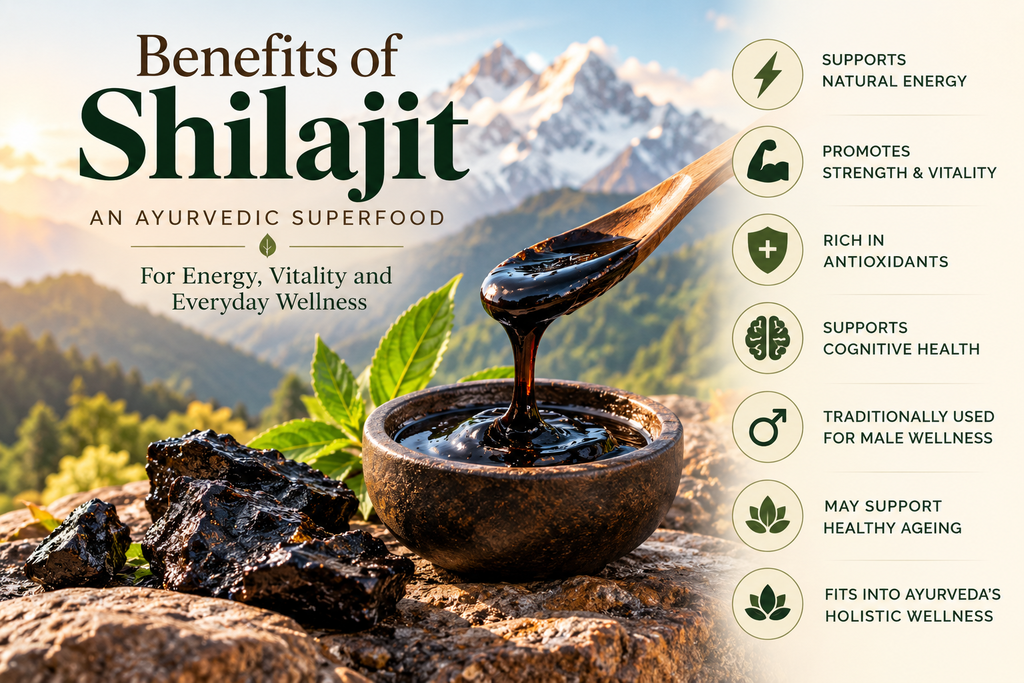
1. May Help Support Natural Energy
One of the best-known traditional uses of shilajit is supporting energy and stamina.
Modern research has explored whether components of shilajit may influence cellular energy processes. Shilajit naturally contains fulvic substances and numerous trace compounds, which are thought to contribute to its biological activity.
For people experiencing ordinary tiredness related to a demanding lifestyle, supporting good nutrition, hydration, sleep, and physical activity should remain the foundation of healthy energy levels. Shilajit may be considered as a complementary wellness supplement rather than a substitute for these essentials.
Persistent or unexplained fatigue should always be discussed with a healthcare professional because it can have many underlying causes.
2. Traditionally Used for Strength and Vitality
Ayurvedic practitioners have traditionally valued shilajit for maintaining physical strength and resilience.
This is one reason it is commonly marketed today to physically active adults and people looking for additional nutritional support as they age.
Some research has examined shilajit’s potential relationship with muscle function, exercise performance, and recovery. These findings are still developing, so claims that shilajit dramatically increases physical performance should be treated cautiously.
A combination of adequate protein, balanced nutrition, regular resistance exercise, rest, and hydration remains much more important for maintaining strength.
3. Contains Fulvic Substances and Trace Components
Shilajit has a complex natural composition. Fulvic substances are among its most widely discussed components.
Fulvic acid is produced during the long-term breakdown of organic material and has attracted scientific interest because of its chemical and biological properties.
Shilajit may also contain various minerals and other naturally occurring compounds. However, its exact composition can differ considerably depending on geographical origin, processing, and purification.
This variability makes choosing a properly tested product particularly important.
4. May Have Antioxidant Properties
Everyday metabolism and environmental factors generate molecules known as free radicals. The body has its own antioxidant defence systems that help manage oxidative stress.
Laboratory and preliminary research has investigated antioxidant properties associated with shilajit and some of its components.
This area is scientifically interesting, but consumers should be careful with sweeping claims that antioxidants can “detox” the body or prevent specific diseases. Human health is much more complex.
A diet rich in vegetables, fruits, whole grains, legumes, nuts, and other nutrient-dense foods remains one of the most practical ways to obtain a broad range of beneficial plant compounds.
5. Traditionally Associated With Male Wellness
Shilajit has a particularly long history of use in Ayurvedic approaches to male vitality.
Some human studies involving purified shilajit preparations have investigated testosterone levels and certain aspects of male reproductive health. Results from individual studies have attracted considerable attention, but they do not establish that every commercial shilajit supplement will increase testosterone or improve fertility.
Anyone experiencing low testosterone symptoms or fertility concerns should seek proper medical evaluation instead of self-treating with supplements. Hormonal and reproductive concerns can have underlying causes that require diagnosis.
6. May Support Healthy Ageing
Ayurveda’s classification of shilajit as a rasayana explains much of its traditional association with longevity and rejuvenation.
Healthy ageing, however, involves much more than taking a supplement. Maintaining muscle strength, cardiovascular health, cognitive activity, nutritious eating habits, social connection, and quality sleep all contribute to long-term wellbeing.
Shilajit can therefore fit more appropriately within a broader healthy lifestyle than being presented as an anti-ageing solution by itself.
7. Being Studied for Cognitive Health
Another interesting area of shilajit research concerns the brain.
Researchers have investigated fulvic acid and other shilajit components in relation to neurological and cognitive processes. Much of this research remains preliminary, however, and stronger clinical evidence is needed before conclusions can be made about shilajit’s ability to prevent or treat cognitive disorders.
For everyday brain health, established habits such as regular physical activity, adequate sleep, intellectual stimulation, social interaction, and balanced nutrition remain important.
8. Fits Within Ayurveda’s Broader Wellness Philosophy
Shilajit’s traditional role makes more sense when viewed within Ayurveda as a whole.
Ayurvedic wellness does not normally depend on one ingredient. Food choices, digestion, physical activity, rest, seasonal routines, and individual constitution can all influence recommendations.
This offers a useful perspective for modern consumers. Instead of expecting one supplement to solve several unrelated health concerns, shilajit can be considered one possible element within a balanced wellness routine.
How to Choose Good-Quality Shilajit
Quality is especially important with shilajit. Raw or poorly processed material can contain undesirable contaminants, including potentially harmful levels of heavy metals or microorganisms.
Look for purified shilajit from a reputable manufacturer that provides clear ingredient information, manufacturing details, batch identification, and preferably independent laboratory testing for purity and contaminants.
Be cautious of products making extreme promises such as instantly increasing testosterone, curing chronic diseases, producing rapid weight loss, or reversing ageing. These claims are not supported simply because a product is Ayurvedic or natural.
Who Should Be Careful With Shilajit?
Shilajit is not appropriate for everyone.
Pregnant or breastfeeding women should generally avoid using it unless specifically advised by a qualified healthcare professional. People taking prescription medicines or living with chronic medical conditions should also discuss shilajit with their doctor or pharmacist before taking it.
Anyone experiencing an unusual reaction after using shilajit should stop taking the product and seek appropriate medical advice.
Conclusion
Shilajit is a fascinating part of Ayurvedic tradition with a long history of use for vitality, strength, and rejuvenation. Its naturally occurring fulvic substances and other compounds have also made it an increasingly interesting subject for modern scientific research.
Potential areas of interest include energy metabolism, physical performance, antioxidant activity, male reproductive health, and healthy ageing. Evidence is stronger in some areas than others, and further high-quality human research is still needed.
For anyone considering shilajit, product purity should be a priority. Choosing a properly purified and tested supplement, following recommended directions, and discussing its use with a healthcare professional when appropriate offers a safer way to incorporate this traditional Ayurvedic substance into a modern wellness routine.
